
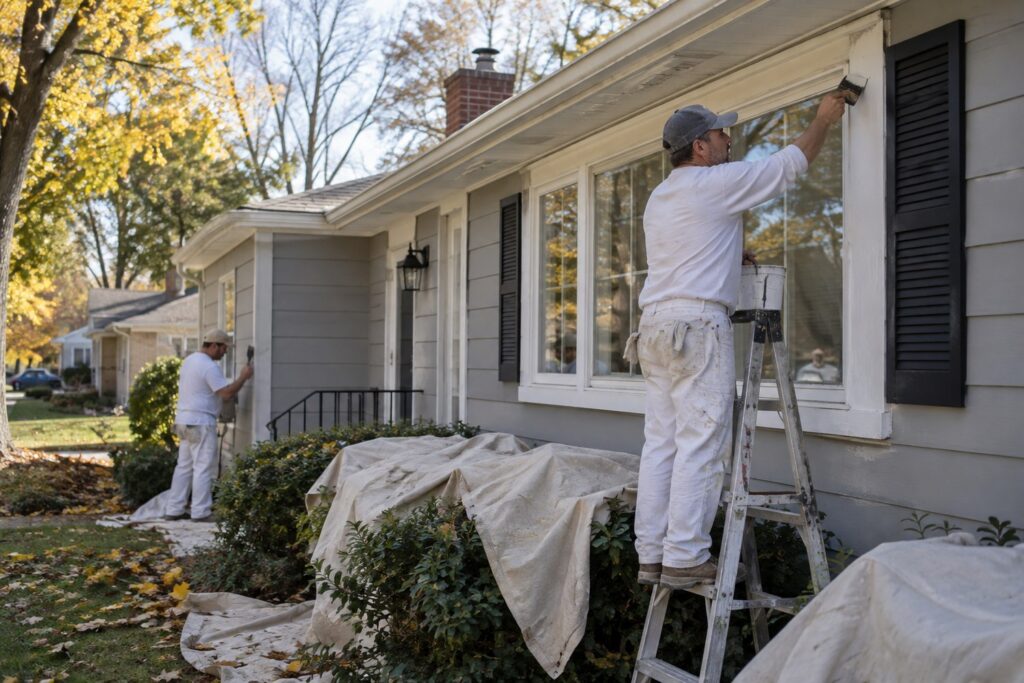
Exterior House Painting Services: What a Full Job Includes, From Prep to Final Walkthrough
Short answer: Professional exterior house painting services cover far more than two coats of paint. A complete job runs in ten steps: an on-site inspection and written quote, confirming colors and specs, protecting your landscaping and fixtures, washing the house, scraping and sanding, repairs and caulking, priming bare and repaired areas, applying the finish coats, painting trim and details, and a cleanup and final walkthrough with you. On a typical Bucks County single-family home, the crew is on site for roughly three to seven working days, depending on size, condition and weather.
Most of a paint job’s lifespan is decided before the first coat goes on. That’s why two quotes for the “same” house can look so different: one includes real prep and one doesn’t. Below we go through every step in order, what you should see happening at each stage, what’s normally included, what’s often extra, and how to check the work before you sign off.
What exterior house painting services include: the 10 steps at a glance
Here’s the whole job on one page. The steps match the process New Look Painting & Remodeling follows on residential exterior painting projects, with the quote and walkthrough added at either end.
Step | What happens | What you should see | Your part |
|---|---|---|---|
1. Inspection and quote | Walk the exterior, note failing paint, rot, caulk gaps | A written quote listing labor, materials and specs | Point out problem areas you already know about |
2. Colors and specs | Lock colors, sheen, paint line, coats | Confirmed color list and start window | Approve colors, sign the contract |
3. Protection | Cover plants, walkways, fixtures, vehicles | Drop cloths and plastic in place | Move patio furniture, grills, planters |
4. Washing | Remove dirt, chalk and mildew | Clean, fully dried surfaces | Close windows, keep pets inside |
5. Scraping and sanding | Remove loose paint, smooth edges, dull gloss | Sound, feathered surfaces | Nothing |
6. Repairs and caulking | Fix damaged areas, fill holes, seal joints | Tight seams at trim, windows, corners | Approve any extra repairs in writing |
7. Priming | Spot-prime bare wood, repairs, stains | Primer on every bare or patched area | Nothing |
8. Finish coats | Apply exterior paint at the specified coats | Even color, no thin spots or lap marks | Stay clear of wet walls |
9. Trim and details | Trim, doors, windows, shutters, rails | Crisp lines between body and trim | Agree on door and shutter colors |
10. Cleanup and walkthrough | Remove debris, uncover plants, final check | Tidy property and a punch list, if needed | Walk the house with the crew lead |
Before any paint: the inspection, quote and schedule
1. On-site inspection and a written quote
A real exterior quote starts with someone walking around your house, not a number over the phone. They’re looking at the siding type, how the old paint is failing (peeling, chalking, cracking or blistering), soft wood at sills and fascia, failed caulk, and anything that needs repair before painting.
At New Look, that visit ends with a printed quote that lists labor, materials, pricing and work specifications. That last part matters most. A good quote names the prep steps, the primer, the paint line and the number of coats, so you can compare it fairly with another one.
2. Confirming colors, specs and the start date
Once you’ve picked colors, the crew confirms the body, trim, door and shutter colors, the sheen for each, and the product line. New Look works with recognized brands including Sherwin-Williams, Behr and Benjamin Moore, and can recommend low-VOC options. Work typically begins one to three months after the quote, once colors and specifications are verified and the contract is signed.
Still choosing colors? Our guide to choosing the right exterior paint color for your Bucks County home covers fixed elements like roof and stone, neighborhood fit and testing samples on the actual house.
Prep work: where exterior house painting services earn their price
If you remember one thing from this guide, make it this: prep decides how long the paint lasts. Most early exterior failures around here trace back to skipped washing, poor scraping, unprimed bare wood or open joints, not to the paint itself.
3. Protecting your property
Before any washing or scraping, the crew covers what shouldn’t get wet, chipped or painted: shrubs and flower beds, walkways and patios, light fixtures, outlets, house numbers, and cars in the driveway. Landscape, furniture and fixture protection is part of New Look’s exterior prep list.
4. Washing the house
Paint won’t bond to dirt, mildew or the chalky film that old exterior paint leaves on your hand. The house gets washed, often with a power washer at a pressure suited to the siding, then left to dry fully. Rushing this step traps moisture under the new film, and that’s a common cause of blistering.
5. Scraping and sanding
Every loose or peeling edge gets scraped back to sound paint. The edges are then sanded so they don’t telegraph through the new coat, and glossy areas are scuffed so primer can grip. On older homes, this is usually the longest prep step.
Older homes need one extra question. Much of Lower Bucks County, including Levittown, was built in the 1950s and 1960s. In any home built before 1978, older paint layers may contain lead. Under the EPA’s Renovation, Repair and Painting (RRP) rule, a contractor disturbing more than 20 square feet of painted exterior surface on a pre-1978 home must be EPA lead-safe certified and follow lead-safe work practices. Ask about it at the quote stage.
6. Repairs and caulking
Damaged areas are repaired before primer goes on. New Look’s prep includes repairs for holes and cracks, and the team can quote additional maintenance work where it’s needed. Expect the crew to:
- fill nail holes, cracks and small gouges
- re-caulk gaps at trim, window and door casings, and corner boards
- flag soft or rotted wood so you can decide on repair or replacement before painting
- remove rust from exterior metal surfaces such as railings
Open joints let water get behind the paint film, so caulking is one of the cheapest ways to protect the whole job.
7. Priming bare and repaired areas
Bare wood, patched areas and stains get primer. Primer seals the surface, helps adhesion and stops stains or tannins from bleeding through the topcoat. Whether the whole house needs a full prime coat depends on its condition, and your quote should say which you’re getting.
Painting the house: coats, trim and conditions
8. Applying the finish coats
With the surface clean, sound, sealed and primed, the finish coats go on. New Look typically uses rollers and brushes and brings in a sprayer for specialty work where it gives a better finish. Two coats are the usual standard for body siding when color changes or the old paint is worn. One coat gives you color, but not always the film thickness that protects.
Conditions matter as much as technique. Most exterior paints need air and surface temperatures above about 50°F, held overnight while the paint cures, and good crews follow the shade around the house rather than painting walls in blazing sun. Our house repainting timeline explains the Pennsylvania painting season in more detail.
9. Trim, doors, windows and details
Detail work is what people notice from the curb. Trim, doors, windows, shutters and railings are painted after the body so the lines between colors stay crisp. New Look’s exterior work covers siding, windows, trim, doors and banisters.
What’s normally included, and what to ask about
Not every quote includes the same things. Use this table to check yours line by line.
Item | Usually in a full exterior job | Ask about it if it’s not listed |
|---|---|---|
Protection of plants, walkways, fixtures | Yes | |
Washing or power washing | Yes | Wash method for your siding type |
Scraping and sanding loose paint | Yes | |
Filling holes and cracks, caulking joints | Yes | |
Spot-priming bare wood and repairs | Yes | Full prime coat for a color change |
Two finish coats on the body | Depends on the quote | Number of coats, in writing |
Trim, doors, windows, shutters | Depends on the quote | Separate colors and sheens |
Rotted wood replacement | Often priced separately | How much is included, and the rate for more |
Lead-safe work practices (pre-1978) | Required where it applies | Certification and setup |
Decks, porches, fences | Usually a separate scope | Whether to bundle with the job |
Cleanup and final walkthrough | Yes | Who walks the house with you |
A lower number usually means fewer coats, less prep or a narrower scope. Comparing quotes is only fair when the line items match. Our Bucks County interior painting cost guide walks through how to compare written quotes, and the same logic works outside.
How surface type changes the prep
Bucks County homes have a mix of siding, and each needs a slightly different approach.
Surface | Common issue | What good prep looks like |
|---|---|---|
Wood siding and trim | Peeling, soft spots, open seams | Scrape, sand, repair, prime bare wood, caulk |
Aluminum siding | Chalky, faded finish | Thorough wash to remove chalk, then a bonding primer where needed |
Vinyl siding | Warping if painted too dark | Clean well and pick a vinyl-safe color the paint maker approves |
Stucco | Hairline cracks, efflorescence | Clean, fill cracks with a flexible patch, use a masonry-rated coating |
Metal railings | Rust | Remove rust, prime with a rust-inhibiting primer, then topcoat |
If your house has more than one surface type, the quote should treat each one separately.
The final walkthrough: how to check the work before sign-off
10. Cleanup and the final walkthrough
Before the job is called done, the crew removes debris and coverings and the area is left clean. Then comes the step homeowners skip far too often: walking the house with the crew lead. New Look finishes every exterior project with a final inspection, and it’s worth joining it. Here’s what to check:
- Coverage: look along each wall in angled light for thin spots, holidays (missed spots) or lap marks.
- Lines: check that trim, window and door edges are straight where colors meet.
- Overspray and drips: look at windows, roofing, walkways, light fixtures and hardware.
- Caulk: joints at corners, trim and windows should look continuous and smooth.
- Repairs: the areas fixed during prep should be primed and painted, not just filled.
- Property: plants uncovered, fixtures back in place, paint chips cleaned up.
Anything you find goes on a punch list for the crew to touch up before they leave. It also helps to ask for the color names and product codes for your records so touch-ups match later.
How long does a full exterior paint job take?
The crew time is usually shorter than the wait to get on the schedule. Here’s a realistic picture for a typical single-family home.
Phase | Typical time |
|---|---|
Inspection to written quote | A few days to a week |
Quote to start date | One to three months (New Look’s published range) |
Protection, washing and drying | One to two days |
Scraping, sanding, repairs, caulking, priming | One to three days |
Finish coats and trim | Two to four days |
Cleanup and walkthrough | Part of the last day |
Rain, humidity, a lot of rot repair or a large, multi-story house will stretch those ranges. Use them as a guide, and rely on the schedule in your own quote.
Questions to ask before you hire an exterior painter
When you’re comparing exterior house painting services, these questions show quickly which quote is complete:
- What prep steps are included, and are they written into the quote?
- Is the house getting spot priming or a full prime coat?
- How many finish coats on the body and on the trim?
- Which paint line are you using, and in which sheens?
- How do you handle rotted wood you find once work starts?
- If the house was built before 1978, are you EPA lead-safe certified?
- Who will be my contact on site, and who does the final walkthrough?
New Look Painting & Remodeling is licensed and insured, locally owned and operated, and serves homeowners across Bucks County. You can read what local homeowners say on our reviews page, see finished work in the project gallery, or check the towns we cover on our service areas page.
Planning your exterior project in Bucks County
Our exterior season in Lower Bucks runs roughly from late April through mid-October, and good crews book up weeks ahead in spring and fall. If you’re too late for this year, the off-season is the right time to get a quote and lock in an early spring start. It’s also a good stretch for interior painting, which has no season.
Want a written quote that lists every prep step, the paint line and the number of coats? Request a free quote or call (267) 980-1476 to book an on-site visit.
Frequently asked questions
What do exterior house painting services include?
A full job includes an on-site inspection and written quote, protecting landscaping and fixtures, washing, scraping and sanding, repairs and caulking, priming bare and repaired areas, finish coats, trim and detail work, cleanup and a final walkthrough with you.
How long does it take to paint the outside of a house?
On a typical single-family home, the crew is usually on site for about three to seven working days. Size, number of stories, the amount of repair work and weather all change that range.
Do I need to be home while my house is being painted?
Not for most of the job, as long as the crew can reach outdoor outlets and water and pets stay inside. Plan to be there for the start-day check-in and the final walkthrough.
How many coats of paint does a house exterior need?
Two finish coats on the body is the usual standard, especially for a color change or worn paint. Your quote should state the number of coats for the body and the trim.
Is power washing part of exterior painting?
Washing is part of the prep on a proper exterior job, because paint won’t bond to dirt, mildew or chalky old paint. New Look offers power washing, and the method is matched to your siding.
Do painters fix rotted wood before painting?
Prep includes repairs for holes, cracks and damaged areas. Larger rotted sections are usually flagged and priced separately, so ask how the quote handles wood found once work starts.
Should the whole house be primed?
Not always. Bare wood, repairs and stains always need primer. A full prime coat is often worth it for a big color change or badly weathered surfaces, and the quote should say which you’re getting.
Can you paint aluminum or vinyl siding?
Yes, both can be painted with the right prep. Aluminum needs a thorough wash to remove chalk. Vinyl needs a vinyl-safe color from the paint maker so the siding doesn’t warp in the sun.
What paint brands does New Look use for exterior painting?
New Look works with recognized brands including Sherwin-Williams, Behr and Benjamin Moore, and chooses products based on the surface and the project. Low-VOC options are available on request.
Does the weather affect exterior painting?
Yes. Most exterior paints need temperatures above about 50°F that hold overnight, dry surfaces and no rain while the paint cures. Crews also avoid painting walls in direct, intense sun.
What should I check during the final walkthrough?
Check coverage in angled light, straight lines where colors meet, drips or overspray on windows and walkways, continuous caulk joints, finished repairs and a clean property. Anything missed goes on a touch-up list.
What if my house was built before 1978?
Older paint may contain lead. Under the EPA’s RRP rule, contractors disturbing more than 20 square feet of painted exterior surface on a pre-1978 home must be lead-safe certified and use lead-safe practices. Ask about it when you get quotes.
How far ahead should I book exterior painting in Bucks County?
New Look typically starts work one to three months after the quote. For a spring or fall start, ask for your quote early, ideally during the off-season.
Which areas does New Look serve for exterior painting?
New Look Painting & Remodeling is based in Levittown and serves Bucks County, PA, including Newtown, Yardley, Langhorne, Richboro, Holland, Bensalem, Warminster, Warrington, Doylestown, New Hope and Willow Grove.
